"It Made Us Feel Helpful Rather Than Helpless"
PR Newswire
MINNEAPOLIS, May 20, 2026
Call to Pet Poison Helpline Created Calm During Chaos
MINNEAPOLIS, May 20, 2026 /PRNewswire/ -- Duloxetine is a drug commonly used to reduce anxiety, but when Duck Duck the cat was found munching on the remnants of a capsule, it did the opposite for his owner Lori Strickland.
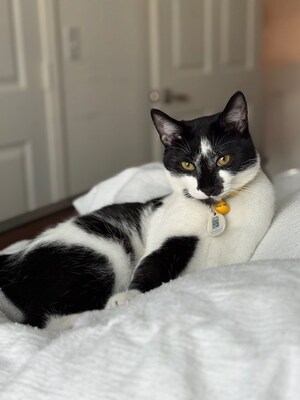
"Two of our family members take Cymbalta™," explained Strickland. "Somehow a capsule ended up on the floor and our cat Duck Duck got ahold of it. My daughter found him nibbling on the casing, so we weren't sure if he ate the contents or was just playing with it. We called our local veterinarian, and they recommended we call Pet Poison Helpline."
The toxicology experts at Pet Poison Helpline took all of Duck Duck's information, including details of the drug (amount potentially ingested, strength), when the ingestion may have occurred and his physical description (age, size, weight, symptoms), and began calculating the potential level of toxicity based on all the factors available. After analyzing the data, they advised Strickland to take Duck Duck to the emergency hospital, which was an hour away. When Strickland arrived at Nashville Veterinary Specialist + Animal Emergency, Pet Poison Helpline had already developed a recommended initial treatment plan. All Strickland had to do was provide the hospital with the case number.
"An hour is a long time when you're scared," Strickland said. "We were panicked, but the Pet Poison Helpline people were very reassuring. They kept us calm and let us know what symptoms to look for on our drive in. It gave us something to do. It made us feel helpful rather than helpless."
Due to the exposure, Duck Duck was at risk for agitation, hyperthermia (elevated body temperature), dysphoria due to serotonin syndrome (increased levels of serotonin in the body), tremors and seizures. Tachycardia (fast heart rate) and blood pressure changes were also possible.
Since an initial treatment plan had already been developed, the hospital team was able to immediately begin treating Duck Duck when he arrived.
"Because no one saw Duck Duck actually eat the capsule contents, we had to treat him with the assumption that he ingested a toxic amount of duloxetine," said Dr. Renee Schmid, a senior veterinary toxicologist and director of Veterinary Medicine at Pet Poison Helpline. Based on the strength of the capsule Duck Duck had access to, even 1/3 of the contents would be enough to cause a concern. "We recommended medical grade activated charcoal to help bind any of the medication still in his stomach and intestinal tract, intravenous fluids to help with potential heart rate, blood pressure, or body temperature issues and medications for agitation, tremors and seizures."
It was advised to monitor Duck Duck carefully overnight and provide symptomatic and supportive care. Because of the owner's quick response and the care provided by the veterinarians and nursing staff at Nashville Veterinary Specialist + Animal Emergency, Duck Duck was able to go home the following day. A delay in his care could have been detrimental.
"Thanks to Pet Poison Helpline, we were able to treat him before he showed symptoms," Strickland added. "At first, we thought we would have to transfer him to our regular veterinarian after emergency treatment, but he was in such good shape that he was able to go home. He is now fine and causing trouble again."
Duck Duck, who lives with his cat brother Goose and two other feline family members, is proving that he truly has nine lives. Before he was a pampered house cat, he was a feral stow-away in a car engine.
"My daughter is a mechanic," Strickland explained. "One day a customer brought in a car, and she heard noises coming from the engine. It turned out to be a tiny little kitten, no more than six weeks old. We weren't in the market for another cat, but we already had one named Goose, so my daughter decided to name him Duck Duck. He's been with us ever since."
Pet Poison Helpline created Toxin Tails to educate the veterinary community and pet lovers on the many types of poisoning dangers facing pets, both in and out of the home. All the pets highlighted in Toxin Tails have been successfully treated for the poisoning and fully recovered.
About Pet Poison Helpline
Pet Poison Helpline®, your trusted source for toxicology and pet health advice in times of potential emergency, is available 24 hours, seven days a week for pet owners and veterinary professionals who require assistance treating a potentially poisoned pet. Per incident and subscription service options are available. We are an independent, nationally recognized animal poison control center triple licensed by the Boards of Veterinary Medicine, Medicine and Pharmacy providing unmatched professional leadership and expertise. Our veterinarians and board-certified toxicologists provide treatment advice for all species, including dogs, cats, birds, small mammals, large animals and exotic species. As the most cost-effective option for animal poison control care, Pet Poison Helpline's fee of $89 per incident includes follow-up consultations for the duration of the case. The company also offers pethelpline(SM) and pethelplinePRO(SM) subscription services directly to pet lovers. Based in Minneapolis, Pet Poison Helpline is available in North America by calling 800-213-6680. Additional information, including a chat feature for pet owners, can be found online at www.petpoisonhelpline.com.
Contact: Curtis Steinhoff
Pet Poison Helpline®
(602) 300-8466
csteinhoff@petpoisonhelpline.com

 View original content to download multimedia:https://www.prnewswire.com/news-releases/it-made-us-feel-helpful-rather-than-helpless-302776847.html
SOURCE Pet Poison Helpline

